
How do I know if my wrist blood pressure monitor is accurate
author: Bela
2024-12-20
Wrist blood pressure monitors may exhibit some accuracy when detailed instructions are followed and measurements are compared with those taken by medical professionals. For the most reliable blood pressure measurements, the American Heart Association recommends an upper arm cuff sphygmomanometer with a cuff that wraps around the upper arm.
For some individuals with large upper extremities, it may be difficult to find the right size cuff at home. In such cases, measurement with a wrist blood pressure monitor may be feasible. Additionally, a wrist monitor may be an option for patients who have undergone axillary lymph node dissection.
Improper positioning of the wrist sphygmomanometer when used in the home environment often results in high measurements. To ensure accuracy, the device should be placed directly on the radial artery of the wrist (where the pulse can be felt) and should not be measured through clothing. Also, keep your wrist at the same level as your heart and remain stationary throughout the test. Avoid bending your wrist, which can interfere with the accuracy of the results.
It is important to note that home blood pressure readings often differ from those taken by a medical professional. If you have a wrist blood pressure monitor, it is recommended that you bring it to a healthcare professional for comparison. Your healthcare team can verify that your device is functioning properly by comparing arm and wrist blood pressure readings.
Measurement steps
1. Expose the wrist:
Expose the wrist to be measured, keeping the palm up and the hand straight.
1. Expose the wrist:
Expose the wrist to be measured, keeping the palm up and the hand straight.
2. Wear a wrist strap:
Tie the wrist band one centimeter above the transverse wrist line on the side to be measured, taking care that the band is appropriately elastic, not too loose or too tight, and preferably able to stretch down 1 finger.
Ensure that the air pocket of the cuff covers at least 80% of the circumference of the wrist, and for those with thicker wrists, choose an appropriately wide cuff.
3. Adjust the posture:
If the subject is in the sitting position, keep the wrist cuff in a position flush with the heart.
If the measurement is taken in the prone position, also try to keep the upper arm at the same level as the heart, but wrist sphygmomanometers are usually more suitable for measurements in the sitting position.
4. Start the measurement:
Press the switch on the sphygmomanometer and the sphygmomanometer will inflate automatically.
Wait for the sphygmomanometer to deflate automatically and display the measurement result.
5. Read the data:
Read data such as systolic blood pressure, diastolic blood pressure and heart rate from the display.
If multiple measurements are required, take each measurement 1-2 minutes apart and take the average value as the final blood pressure value.
Translated with www.DeepL.com/Translator (free version)
What is the best blood pressure machine for home use?
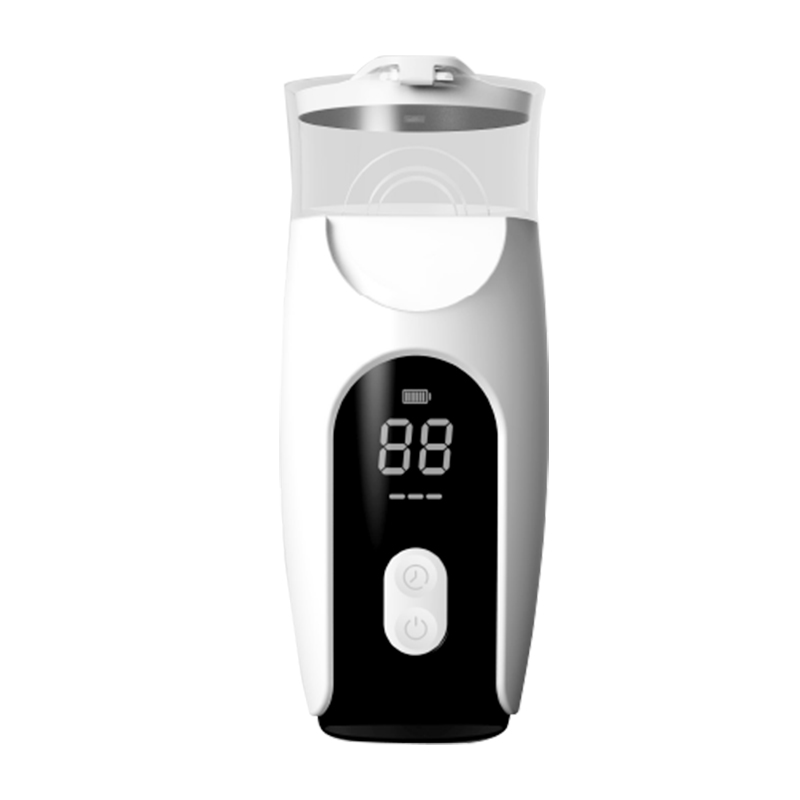
Nebulizer with digital display
Related Article
Hanhan Technology has taken a big step forward in the medical device field by launching a medical mesh nebulizer with a digital display
Nebulizer with digital display
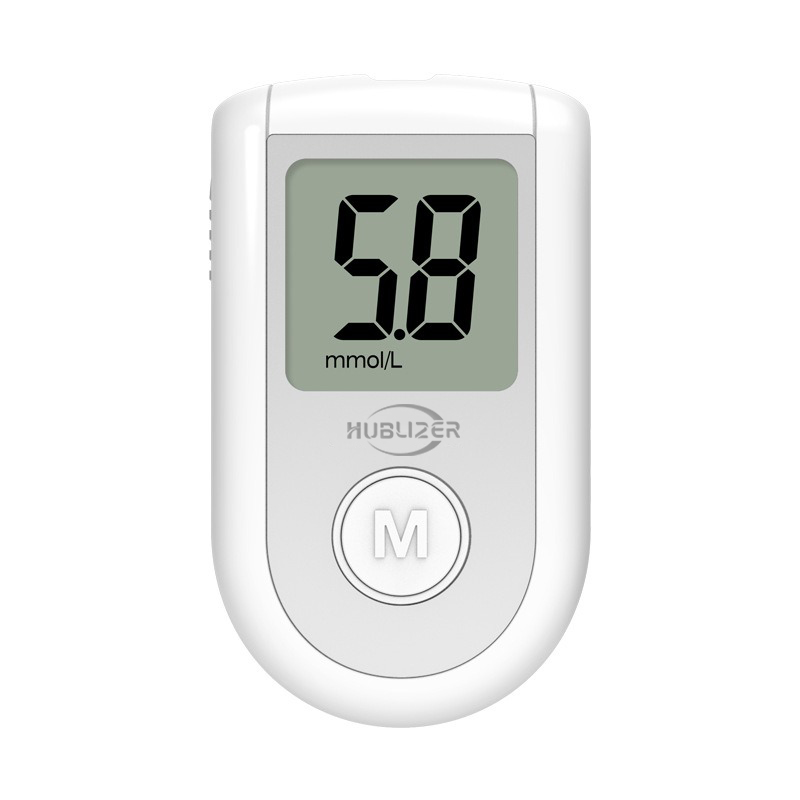
Choosing a blood glucose meter: personalised adaptation for accurate diabetes management
Choosing a blood glucose meter
The human blood pressure is like a tide throughout the day, experiencing three significant fluctuation stages, including two peaks and one trough. These three time periods constitute the main contours of blood pressure changes.
When is the time of day when blood pressure reaches its highest value?